A minimum viable product (MVP) is the simplest version of a product that lets you test a real business idea with real users, using the least time and money. You build only the core feature that solves one problem, launch it, and let customer behaviour — not guesswork — guide what you build next.
Every founder feels the same pull: build the whole thing, then launch. It feels safer. It is actually the riskiest path you can take, because you spend your entire budget before a single customer tells you whether they want it. An MVP flips that order. You learn first, then invest. Here is what an MVP really is, why the sharpest software teams start there, and what it costs to build one in South Africa.
What is an MVP (minimum viable product)?
The term was popularised by Eric Ries in The Lean Startup. His definition is exact: an MVP is "the version of a new product which allows a team to collect the maximum amount of validated learning about customers with the least effort."
Two words carry the weight. Minimum means you strip out every feature, screen, and bit of polish that does not help you learn. Viable means what remains must still work well enough for a real person to use it and get real value. An MVP is not a broken half-product — it is a complete, small one.
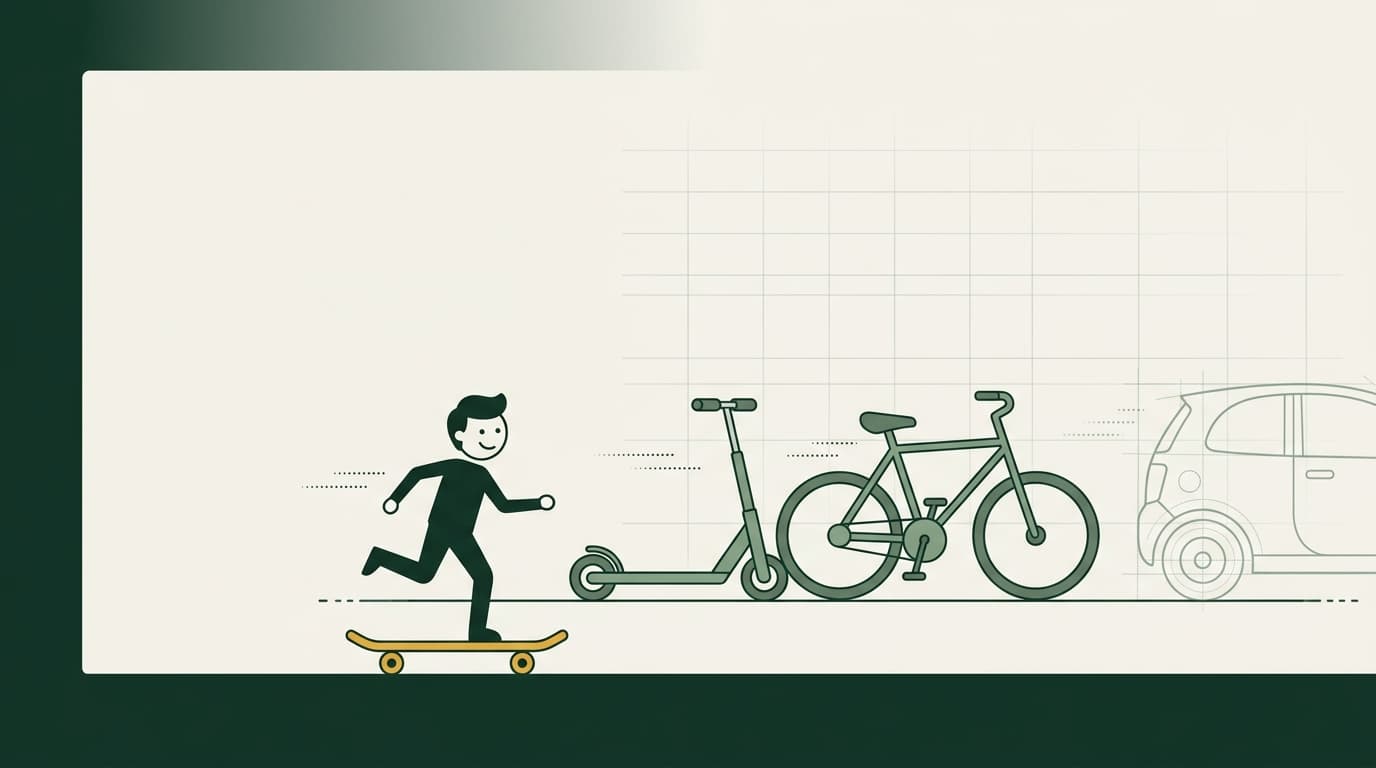
A well-known illustration makes it tangible. If your goal is a car, an MVP is not a single wheel, or a chassis with no seats. It is a skateboard. It is not glamorous, but it moves someone from A to B today — and while they ride it, you learn what they actually need next. Maybe it is a scooter. Maybe they never wanted a car at all.
That is the real job of an MVP: replacing opinion with evidence. Market research tells you what people say. An MVP shows you what they do.
Why should you start with an MVP?
Because building the wrong thing is the most expensive mistake in software — and it is the most common one. When CB Insights analysed why startups fail, weak product-market fit sat at the top: in their 2024 update, roughly 43% of failed startups never found a market that wanted their product. Most did not run out of ideas. They ran out of money proving an idea nobody was waiting for.
An MVP is how you stay off that list. Starting small gives you five concrete advantages:
- You de-risk the big spend. A validated concept earns the right to a full budget. An unvalidated one should not get it.
- You reach the market faster. Weeks instead of a year means you learn while competitors are still in planning.
- You get honest feedback, early. Sign-up rates and paying users tell the truth in a way focus groups never do.
- You protect your cash. You spend on what works and cut what does not, before the numbers get large.
- You build a fundable story. "Here is traction from 300 real users" raises money. "Here is our idea" rarely does.
The goal of an MVP is not to build less. It is to learn more, sooner — so every rand you spend afterwards is aimed at something you already know people want.
Not sure whether your idea is worth building yet? Book a free discovery call and we will help you find the smallest test that proves it.
MVP vs prototype vs proof of concept
These three get muddled constantly. A proof of concept answers "can we technically build this?" — often throwaway code. A prototype answers "how should it look and flow?" — usually a clickable design with no working engine behind it. An MVP answers the only question that pays the bills: "will real people use and pay for this?" It is live, in the market, with actual users. You may pass through all three, but only the MVP earns revenue and real evidence.
What are the different types of MVP?
You do not always need to write code to test an idea. The best MVP is the cheapest one that still gives you a real answer.
| MVP type | How it works | Well-known example |
|---|---|---|
| Landing page | A single page describes the product with a sign-up or pre-order button to measure demand | Buffer's pricing-page test |
| Explainer video | A short video shows the product before it exists; the call to action is "join the waitlist" | Dropbox |
| Wizard of Oz | The front end looks automated; humans quietly do the work behind the scenes | Zappos |
| Concierge | You deliver the service by hand to each early user and learn from them directly | Airbnb |
| Piecemeal | You stitch existing off-the-shelf tools into a working service | Many early SaaS products |
| Single-feature | You build one core feature exceptionally well and nothing else | Uber (UberCab) |
The lesson from the table: a landing page or an explainer video can validate demand before you commit to a full custom software build. Choose the lightest tool that tests your riskiest assumption.
What are examples of successful MVPs?
The biggest names in tech started embarrassingly small:
- Dropbox did not build cloud syncing first. It released a three-minute explainer video showing how the product would work. The waitlist jumped from around 5,000 to 75,000 overnight — proof of demand before the hard engineering began.
- Airbnb began when its founders put air mattresses in their flat and built a bare-bones website to rent the space to conference-goers who could not find a hotel. One page, one city, one weekend.
- Zappos tested whether people would buy shoes online by photographing stock in local shops and buying each pair by hand once a customer ordered. No warehouse, no inventory system — just a test of the core assumption.
- Uber launched as "UberCab": a simple app, three cars, one city. It proved that hailing a ride with one tap was something people wanted, then scaled from there.
None were impressive on day one. All were viable — and all learned fast.
How much does it cost to build an MVP in South Africa?
Costs vary widely with scope, but South African rates stay competitive with the US and Western Europe, which is part of why local and international founders build here. The ranges below are indicative — the honest answer to "what will mine cost?" only comes from a scoping conversation.
| MVP approach | What it typically includes | Indicative range (ZAR) | Typical timeline |
|---|---|---|---|
| Landing-page / validation MVP | One page, waitlist or pre-order, basic analytics | R15,000 – R60,000 | 1–3 weeks |
| Standard web or mobile MVP | Core feature, login, simple dashboard, one integration | R80,000 – R250,000 | 6–14 weeks |
| Complex / regulated MVP | Payments, multiple user roles, compliance and audits | R250,000 – R750,000+ | 4–8 months |
Two things move these numbers most: how many features you insist on keeping (the enemy of a true MVP), and whether you are in a regulated space like fintech or health, where POPIA-grade compliance and audits add time. A disciplined MVP that solves one problem well almost always lands at the lower end. For a fixed quote against your specific idea, book a scoping call.
How long does it take to build an MVP?
Most MVPs take between one and six months, and scope is the biggest lever. A no-code landing page or validation test can be live in one to four weeks. A standard web or mobile app MVP with a core feature, login, and one integration usually runs three to four months — the industry average sits around four and a half. Complex or regulated builds stretch to six to nine months once audits and third-party reviews are added.
The fastest way to blow the timeline is scope creep: every "while we are at it" feature pushes your launch — and your learning — further away. An experienced team's main job is to protect the "minimum" in minimum viable product.
Do you always need to build an MVP from scratch?
No — and this is where founders save the most. Sometimes the problem you are solving is an operations problem, not a new-product problem. If you are drowning in disconnected tools, spreadsheets, and manual admin, you may not need to build anything: an all-in-one platform like Business OS already handles sales, finance, and operations out of the box.
Build a custom MVP when your idea is genuinely new to the market or core to your competitive edge. Buy an existing platform when the capability already exists and you simply need it running. The skill is telling the two apart — exactly the kind of call a good software partner should help you make honestly, before you spend.
The Syniq approach to building an MVP
Starting small only works if the small thing is built well. Our in-house Cape Town team builds MVPs on a modern, scalable stack — Next.js, TypeScript, and Supabase — so the version that validates your idea can grow into the version that scales it, without a costly rebuild. No offshore handoffs, weekly demos, and POPIA-grade security from day one. You see progress every week and own working software at the end, not a slide deck.
Whether you need a landing page to test demand or a full custom build, the discipline is the same: solve one real problem, ship it, and let your users show you the way forward.
Ready to test your idea without betting the budget on it? Book a no-obligation discovery call and we will help you scope the smallest version worth building.
Frequently asked questions
What is an MVP in simple terms? An MVP, or minimum viable product, is the simplest working version of a product — just the core feature that solves one problem. You launch it to real users to learn whether they want it before investing in the full build.
Is an MVP the same as a prototype? No. A prototype demonstrates how a product might look and flow, usually without a working engine behind it. An MVP is a live, functioning product in the hands of real users, built to test genuine demand and gather feedback.
How much does an MVP cost in South Africa? Indicative ranges run from about R15,000–R60,000 for a landing-page validation MVP, R80,000–R250,000 for a standard web or mobile MVP, and R250,000 or more for complex or regulated builds. Your exact cost depends on scope, so a scoping call gives you a fixed quote.
How long does it take to build an MVP? Typically one to six months. Simple no-code validations can launch in one to four weeks, standard MVPs in three to four months, and complex or regulated products in six to nine months. Keeping scope tight is the fastest way to launch sooner.
Do I always need to build an MVP from scratch? Not always. If your need is better operations rather than a brand-new product, an existing platform such as Business OS may solve it faster and more cheaply. Build custom when your idea is new to the market or central to your competitive advantage.
Is an MVP only for startups? No. Established businesses use MVPs to test new products, internal tools, and process changes before committing full budgets. The principle — learn cheaply before you invest heavily — applies to any organisation.